Gummo Marx Way
Inherent ViceGummo Marx Way, known locally as GMW, is a hard-luck boulevard in the South Bay where private misfortune and institutional violence converge. Adrian Prussia’s beach apartment stands on the street, and it is where Detective Vincent Indelicato was killed; the same location later brings Doc Sportello into the orbit of Prussia and Bigfoot Bjornsen. The road is more than a backdrop: it gathers the book’s displaced people, concealed histories, and compromised loyalties into a single, repeatedly revisited stretch of Los Angeles.
Setting and Social Geography
Gummo Marx Way lies between the populations of the South Bay beach towns and the other places people hope to reach. The narrative presents it as a boulevard of bad luck, a place people end up rather than a place they claim as home. Its social map is made from temporary and precarious connections: a girlfriend’s house, a dubious dealer’s business, a pay phone from which someone in trouble calls for help. That recurring pattern makes the street a kind of shadow route through the region, linking lives that otherwise remain unacknowledged.
The street’s significance sits within a wider history of Los Angeles land use. Aunt Reet’s detailed knowledge of property extends from the desert to the sea, including the histories that deeds and contracts leave out. The book frames redevelopment as a sequence of communities being moved aside: Mexican families displaced from Chavez Ravine for Dodger Stadium, American Indians cleared from Bunker Hill for the Music Center, and Tariq Khalil’s South Central neighborhood bulldozed for Channel View Estates. Tariq connects that displacement to the wartime incarceration of Japanese Americans and the arrival of Black residents in South Central afterward; he sees the new development as another turn in the same history of removal.
Channel View Estates, advertised as “A Michael Wolfmann Concept,” provides a concrete counterpoint to the marginal street. Doc drives through its unfinished landscape, past model homes, completed houses, and construction skeletons extending into unincorporated land. The development’s planned Spanish Colonial appearance, its lack of shade trees, and its position beside a neglected flood-control channel make the transformation of land visible as both real-estate project and social upheaval. Later, Crocker Fenway describes the conflict as a struggle between residential owners and developers, while Doc identifies property values as the interest beneath Crocker’s environmental language. The contrast makes Gummo Marx Way part of a larger geography in which development changes who belongs and who is pushed to the edges.
The Killing on Gummo Marx Way
The street’s central criminal history emerges when Doc reads the record of Adrian Prussia’s case. Prussia’s lawyers argued that he had mistaken the person entering his beach apartment for the angry husband of a woman he knew, and claimed that he believed the person was armed. The person killed was Vincent Indelicato, an LAPD detective whom Prussia had encountered in the course of his business. Indelicato’s longtime partner, Lieutenant Christian F. Bjornsen, identified the body. The official account places a detective’s death inside a defense of mistaken identity and self-protection, while the case record also shows how Prussia escaped punishment for murder.
The address carries particular weight because Gummo Marx Way is where the documents place both Prussia’s apartment and Indelicato’s killing. For Doc, the discovery joins two previously separated facts: Bigfoot’s partner had been killed by Prussia, and the department’s handling of the case appeared to have aided the killer. The street thus becomes the point where a legal file turns into a personal loss. What first seemed like Bigfoot’s unexplained melancholy becomes legible as mourning for the partner he did not name or discuss.
Doc and Bigfoot Return
Later, after parting from Bigfoot, Doc recognizes that he is walking along Gummo Marx Way. The files Penny Kimball had shown him identify it as the location of Prussia’s house and Indelicato’s death. He considers how often Bigfoot may have returned to the street after losing his partner, and how helpless he must have felt. Doc’s recognition changes an ordinary walk into an encounter with the investigation’s concealed emotional history: the route itself reminds him that Bigfoot’s investigation of Prussia is inseparable from grief and guilt.
Doc approaches a surfer’s cabana with a black-windowed 1959 Cadillac hearse parked outside and longboards beside it. When Adrian appears, Doc confronts him; sirens sound from farther down the street. Prussia falls face-first into the road and does not appear to move. Doc sees an ambulance and police cars near Prussia’s house, then continues walking rather than returning to the scene. Bigfoot later pulls alongside him, asks whether he is coming, and takes him away. Their departure leaves the police response behind while Doc and Bigfoot resume their uneasy association.
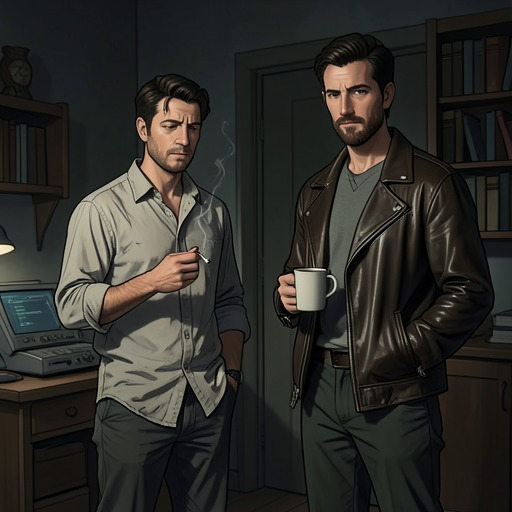
On the San Diego Freeway, Bigfoot finally speaks about Indelicato. He remembers his partner arriving from New York, how their different speech rhythms initially separated them, and how he gradually began to speak like him. The two officers had come to Gummo Marx Way on a tip. Indelicato entered the house before Bigfoot could stop the unit; Bigfoot was calling for backup when he heard shots. He recalls calling for his partner and knowing both that Indelicato was inside and that he was already lost. Bigfoot’s account gives the street a second history alongside the case file: it is where a partner died and where the surviving officer has continued to measure what he might have done differently.
Narrative Significance
Gummo Marx Way links a public system of land and policing to private experiences of loss. The neighborhood’s place in the South Bay’s shifting geography echoes the larger account of communities displaced by redevelopment, while the street’s reputation for misfortune makes it a destination for people caught between safer, more established places. Its marginality is not isolation: it sits within a network of property interests, police power, informal economies, and people seeking help after ordinary protections have failed.
The street also structures recognition. A name in a file becomes an address; an address brings Doc back to the location of Indelicato’s death; and that location helps him understand Bigfoot’s silence. The return to Gummo Marx Way makes the investigation’s hidden relationship visible without resolving its institutional causes. Even after Prussia’s death and Bigfoot’s confession, the street remains a place where consequences persist: Doc faces the prospect of legal trouble, and Bigfoot’s account of his partner’s death ends not in vindication but in an admission of continuing responsibility and grief.